What Happens During the Assessment
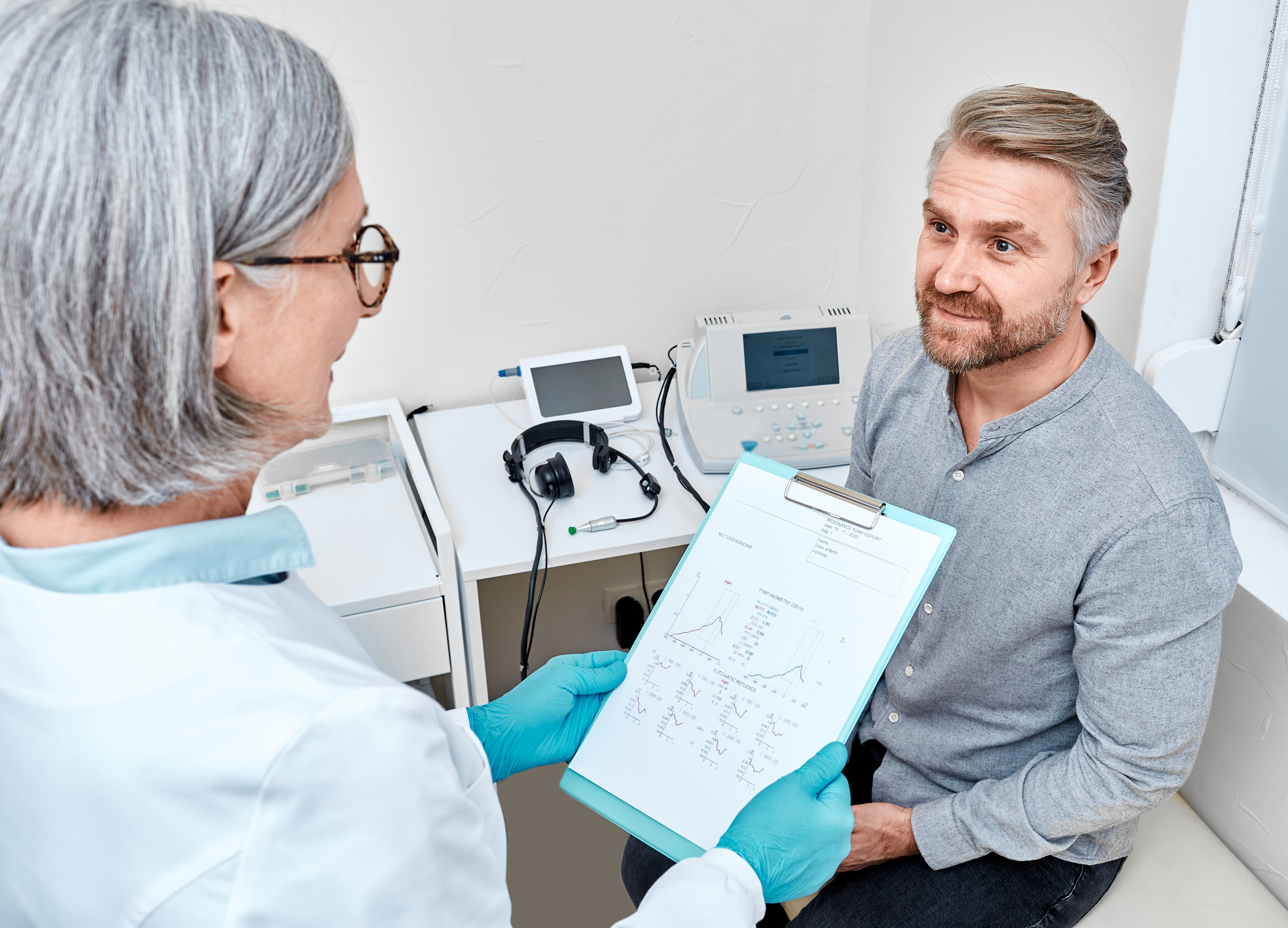
Your appointment begins with a discussion about your hearing history, previous hearing assessments and any questions you would like to explore during the visit. We also examine the ears to identify anything that could influence the results, including excessive ear wax or other visible conditions.
The hearing assessment is then completed using specialist audiology equipment in a controlled environment. You will listen to a range of tones through headphones before completing speech recognition testing that measures how clearly spoken words are understood.
Each stage contributes different information about your hearing performance. Once testing has finished, we review the results together, explain what they show and answer any questions before discussing whether any further recommendations may be appropriate.
Our aim is to make every assessment informative, straightforward and easy to understand without unnecessary technical language.
Who Benefits From Hearing Assessments?
Hearing assessments can be useful in many different situations and are not only arranged when hearing loss is suspected.
Some people have regular reviews because they already wear hearing aids and want to monitor how their hearing is performing over time. Others arrange assessments because of previous occupational noise exposure or as part of maintaining their long-term hearing care.
There are also people who simply want an up-to-date understanding of their hearing before making decisions about future support or treatment. A professional assessment provides reliable information regardless of the reason for attending.
By measuring hearing accurately, it becomes much easier to identify whether your hearing remains stable or whether further discussion may be worthwhile.
Understanding Your Hearing Profile
Once testing has been completed, we explain your hearing profile in clear and practical terms.
The results illustrate how your hearing responds across different frequencies and how effectively speech is recognised during the assessment. Rather than presenting numbers without context, we explain what each part of the assessment means and how the different findings relate to one another.
If your hearing is performing within expected levels, we discuss whether future reviews may be beneficial. Where changes have been identified, we explain the findings carefully and outline the options that may be appropriate based on your individual hearing profile.
Every recommendation is made using the assessment results as the starting point, helping ensure future decisions are based on accurate information rather than assumptions.