By Toby Meadows, Audiologist & Principal
After my chat with John Darvell on BBC Radio Bristol earlier this year, a few people asked us what the difference is between a hearing screening and a full hearing assessment. The two terms get used almost interchangeably, but they are not the same thing. Here is what you actually need to know.
What is a hearing screening?
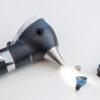
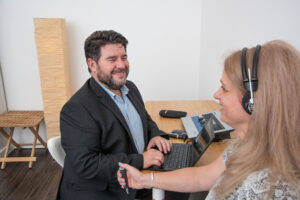 A hearing screening is a shorter test that checks your hearing across a targeted range of frequencies. We focus on the mid-range and the higher frequencies, because age-related hearing loss almost always starts there. The hair cells inside the cochlea that detect high frequency sounds are the first to wear away over time, which is why people with gradual hearing loss often stop noticing certain sounds. Birdsong is a classic example. It disappears so gradually that many people do not realise it has gone.
A hearing screening gives us a clear picture of whether your hearing is within the expected range, whether you are showing signs of early loss, and what the next step should be. It does not take long, and it does not require any preparation on your part.
What is a hearing assessment?
 A full hearing assessment maps your hearing across a much wider range of frequencies, around eight more data points than a screening. This gives us the detailed, accurate audiogram we need to programme hearing aids precisely to your individual hearing profile. If a screening suggests you could benefit from hearing aids, or if you have already decided you would like to explore that option, a full assessment is the logical next step.
The assessment takes a little longer than a screening, and the results are more detailed. We will go through the audiogram with you and explain clearly what it shows.
How does the process work in practice?
For most new patients, we start with a screening. If the results indicate a loss and you would like to explore your options with us, we book you in for a full assessment. If the screening suggests your hearing is within normal limits but you have specific concerns, tinnitus for instance, or difficulty hearing in noisy environments, we will discuss what to do next at that point.
Some patients whose screening results suggest a loss prefer to go through the NHS route rather than the private route. That is absolutely fine. We can send your audiogram to your GP for an NHS adult audiology referral. Our job is to make sure you end up in the right place for you.
 What about a free trial?
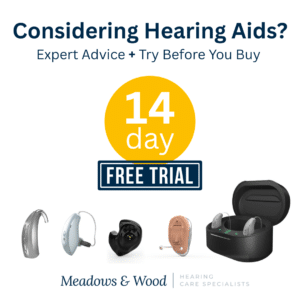
One thing I often suggest, particularly for patients who are not sure whether hearing aids would make a meaningful difference, is our 14-day free trial. It is difficult to know what you have been missing until you hear it. A trial period gives people a chance to experience the difference in their own environment, in their own life, before making any commitment. In my experience, most people who try hearing aids are genuinely surprised by how much they had been filtering out.
The most common thing patients say after their first trial? That they can hear the birds again.
Who should come in?
If you caught my conversation with John Darvell on BBC Radio Bristol, you will remember we talked about how many people do not realise their hearing has changed until someone else points it out. If you have noticed you are asking people to repeat themselves, finding it harder to follow conversations in noisy places, or if someone close to you has suggested your hearing might have changed, it is worth getting checked. A screening is a sensible first step, and there is no obligation beyond that.
We offer hearing screenings and full assessments across all our clinics in Worle, Weston-super-Mare, Portishead, Shirehampton and Clevedon. Walk-ins are welcome at our Worle clinic daily. For all other locations, give us a call on 01934 248426 to book an appointment.