

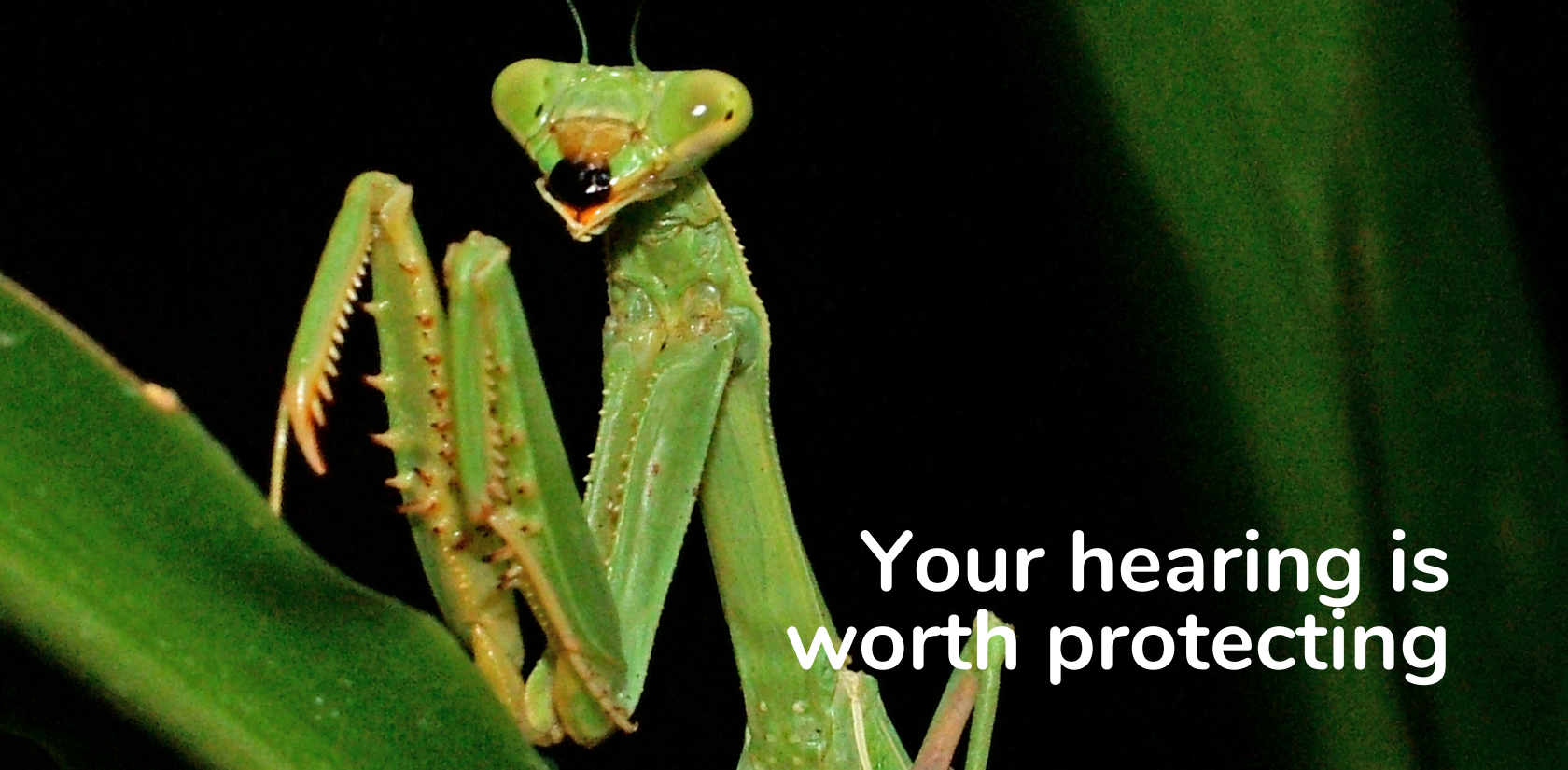
Spring is on its way, and with it comes warmer days and garden visitors, perhaps even some unexpected ones. Last autumn, praying mantises were spotted in Cornwall for the first time. With breeding populations already on the Isle of Wight and Channel Islands, it’s only a matter of time before these fascinating insects reach Somerset and Bristol.
What makes the praying mantis so remarkable isn’t just its distinctive appearance, but where it hears from. Tucked in the centre of its chest sits a single ear, developed to detect the ultrasonic calls of hunting bats. When a mantis hears those high-frequency chirps whilst flying at night, it drops out of the sky to avoid becoming dinner.
Deep inside your inner ear lie thousands of microscopic hair cells topped with even tinier projections called stereocilia. When sound vibrations reach them, they bend, sending electrical signals to your brain. Unlike birds or fish, humans cannot regenerate these cells once damaged. Loud noise, age or certain medications can harm these fragile structures, leading to tinnitus or permanent hearing loss.
Whether it’s birdsong in the garden or conversations with loved ones, your hearing connects you to the world. Regular assessments and addressing concerns early make all the difference. If you’ve experience tinnitus or noticed changes in your hearing, it’s worth having a chat. Modern hearing technology offers natural sound quality and features that adapt to your environment.
This summer, you might even spot a praying mantis in your garden. If you do, take a moment to appreciate that single ear working away, and perhaps give a thought to your own remarkable hearing system. And don’t forget, we’re here to help you and your family with any concerns you have about your hearing. Pop in or give us a call on 01934 248426.